

Natural History Museum of Crete Exhibition

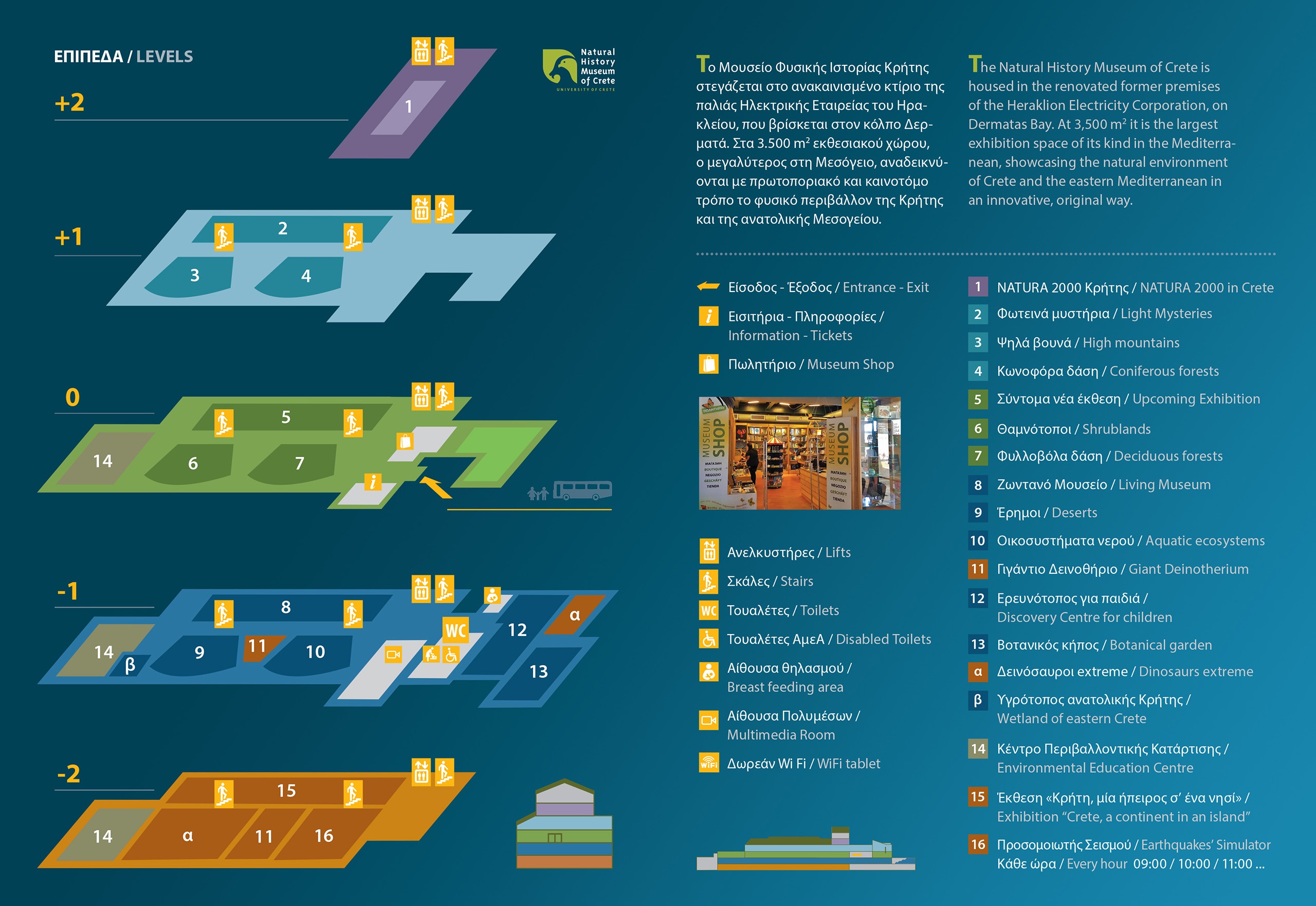
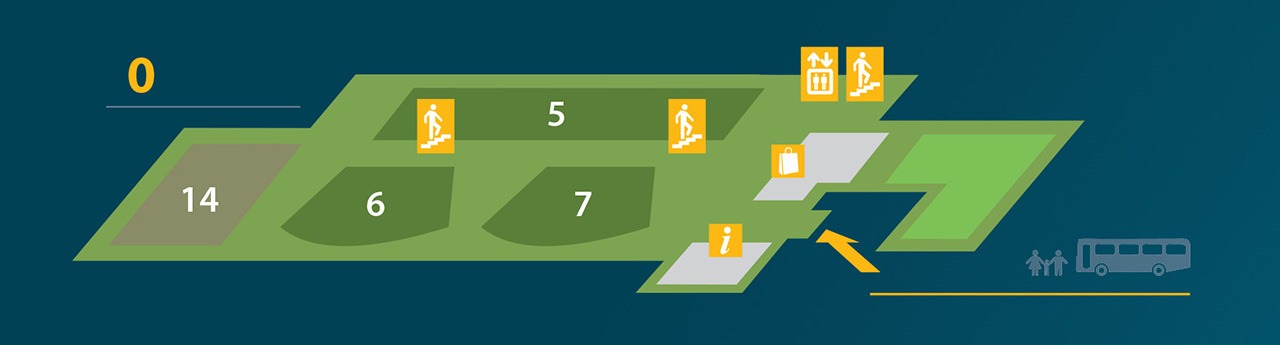
The Natural History Museum of Crete (NHMC) demonstrates with an impressive manner the natural environment of eastern Mediterranean area with special emphasis on Greece and Crete. The exhibition is located at Sofokli Venizelou Avenue in Heraklion.

Detail from the Live Museum

Address:
Sofokli Venizelou Ave.
(Dermata bay – Heraklion port)
71202 Heraklion Crete, Greece

More in Google Maps

Reservations - Opening hours

Opening hours: Daily 09:00 to 21:00. General Admission Fee: 8 €

The Dinos of Patagonia return to Crete


The temporary exhibition "Dinos of Patagonia in Crete" returns to the Natural History Museum of Crete οn 6th of June.

The opening hours from 6th of June will be:

Daily open: 09:00 - 21:00.


Winter opening time


The winter opening time from Saturday 22 of September 2012, of the Natural History Museum Exhibition is:

Monday to Friday: 09:00 - 15:00

Weekends: 10:00 - 18:00


The Megadioramas
The Mega-Dioramas consist the biggest part of the Museum's exhibition. These are realistic representation of ecosystems found in the Eastern Meditarranean region.
The gigantean Deinotherium
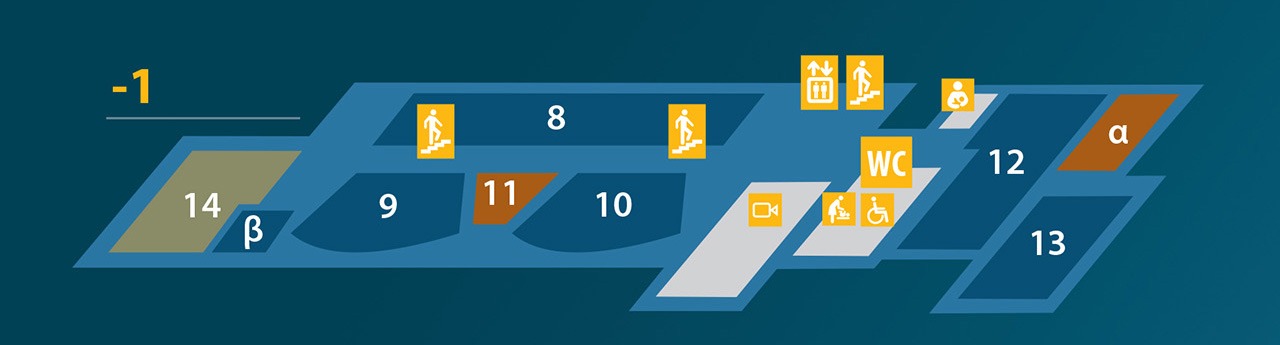
The gigantean Deinotherium (Deinotherium giganteum), an animal that lived in Crete 9 million years ago is now revived in the premises of the Natural History Museum of Crete. The excavations held by the museum at the area of Agia Fotia in Siteia, exposed an almost complete skeleton of the extinct animal, which appears to be one of the largest animals of this species that have ever lived on earth. Teeth, vertebrae, ribs, and many other bones, amongst them the lower jaw with a complete tusk which represents the largest Deinotherium tusk ever found (1.5 m), have been brought to the surface. A...
The "Live Museum"
The "Live Museum" is a special arranged area with small scale aquariums and terrariums housing living animals that can be found in Eastern Meditarranean region.
The Seismic Table
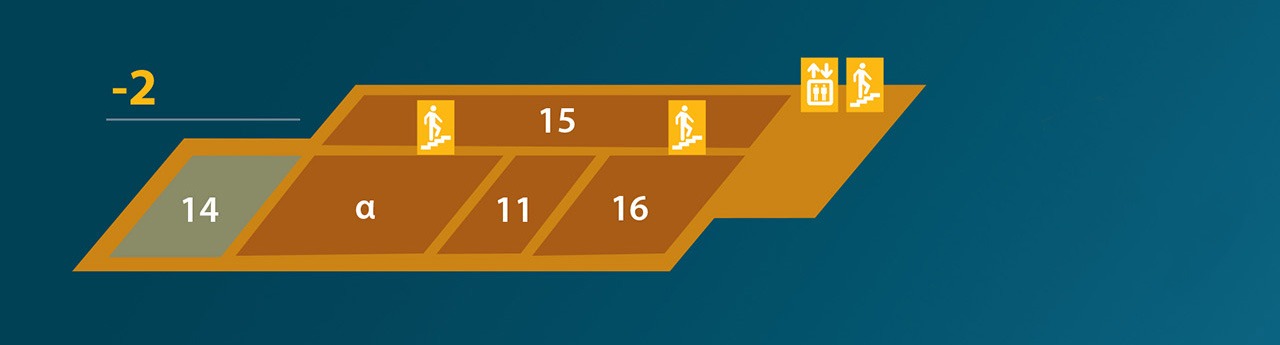
An educational seismic table (earthquake simulator) is now operating at the Museum offering visitors the opportunity to learn about earthquakes and experience, in a safe environment, real earthquakes. The table is located in a specially designed hall at the -2 level of the exhibition where information about the phenomenon and the seismicity of eastern Mediterranean is presented. Visitors can experience special programs in Greek and English language, prepared in collaboration with the National Organization for Seismic Protection (OASP) of Greece, about protection measures and good practices...
The Stavros Niarchos Discovery Center
The Stavros Niarchos Discovery Center in the Natural History Museum of Crete is specially designed for children up to the age of 15.  It is where cutting edge technology is combined with more traditional educational methods, in order to make the learning process more appealing to children. All educational activities are taking place in a set designed to the detail, to imitate the natural environment of east Mediterranean, with emphasis on the island of Crete. What a child can experience in the Discovery Center? In the center...
Fossils' part
Another interesting part of the museum is the exhibition of fossils, the most prominent of which is the Palaeontological collection of the German Professor Siegfried Ε. Kuss. A big part of this collection had been housed for several years in the Natural History Museum of Karlsruhe in Germany. Recently, after a mutual agreement with the Natural History Museum of Crete, the collection returned to Crete permanently.The collection consists of 8200 specimens, the majority of which are fossil bones from Crete and other islands of the South Aegean Sea. In addition, the collection includes a...
RACCE temporary exhibition
A new temporary exhibition has been recently established at the Natural History Museum of Crete, at -2 level,  based on the RACCE traveling exhibition. About 20 posters have been printed and are hosted at the hall, accompanying scientific and edu-tainment installations. Among them visitors can find an educational seismograph (SEP 061) that will be included in the IRIS school seismograph network soon, a display with global earthquakes and volcanic eruptions, a platform to produce our (visitor’s) quakes, and a big tsunami simulator to understand how tsunamis are generated.
Webpage of NHMC Seismograph in IRIS network

Photos